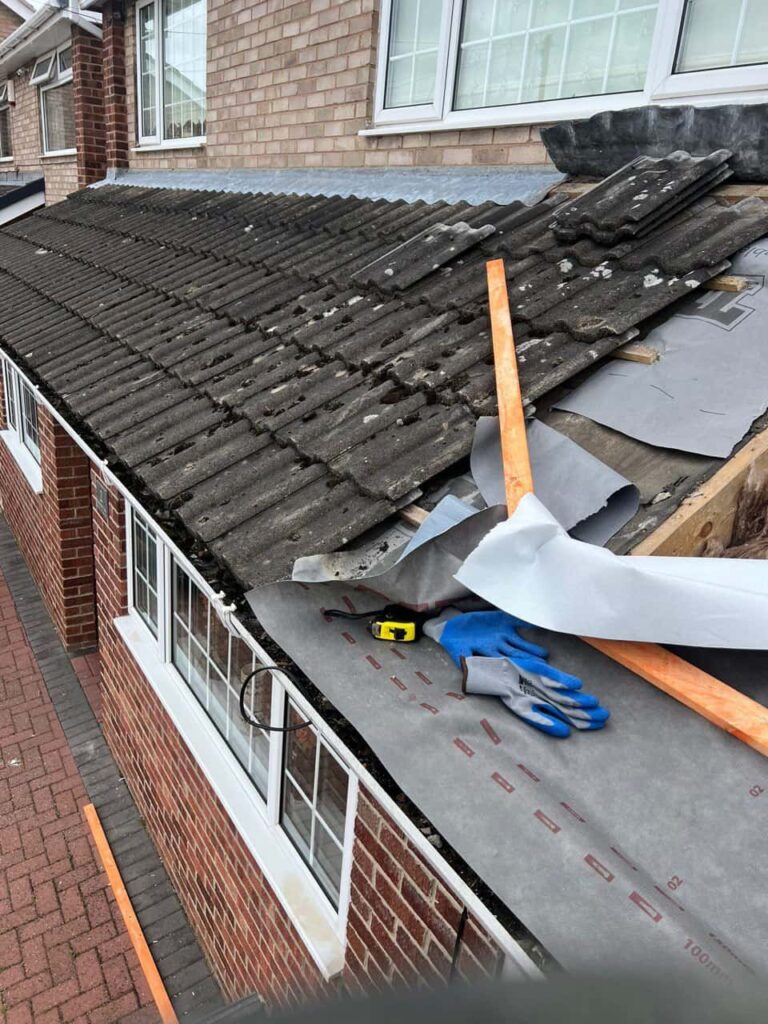
Should You Call a Roofer If a Tile Has Moved but Not Fallen?
A roof tile does not need to fall completely before it becomes a problem. Even a small amount of movement can reduce the overlap between tiles, expose the underlay or create an opening through which wind-driven rain can pass.
The roof may not leak immediately, particularly if the underlay remains intact. However, a moved tile is no longer sitting as the roof was designed to function. Arranging an inspection allows the cause to be identified and the covering to be restored before further movement occurs.
Why Should a Moved Roof Tile Be Professionally Checked?
Roof tiles form a layered system that directs water down the slope and into the guttering. Each tile depends on the correct overlap, secure fixings and support from the battens beneath it.
When one tile moves, several questions need answering:
- Has its fixing corroded or come loose?
- Has the tile’s hidden nib broken?
- Is the supporting batten still sound?
- Has wind lifted the tile?
- Are neighbouring tiles also loose?
- Has the underlay been exposed or damaged?
- Is the movement part of a wider roofing defect?
Simply pushing the tile back into position may hide the visible problem without restoring a secure fixing.
A Small Movement Can Reduce the Weatherproof Overlap
Tiles are laid in overlapping rows so that rainwater flows over their surfaces without reaching the layers underneath. If a tile slips downwards or rotates slightly, the intended overlap may be reduced.
The resulting gap can be narrow and difficult to see from ground level. It may only admit water during prolonged rainfall or when strong winds drive moisture beneath the edge.
This is why a roof can remain dry during one period of rain and leak during another. The direction and intensity of the weather can determine whether water reaches the opening.
The Fixing May Have Failed
Tiles can be secured using nails, clips, nibs or a combination of these methods. Over time, metal fixings may corrode, timber battens can deteriorate and tile nibs can break.
The tile itself may remain intact even though it is no longer properly attached to the roof. Once the original fixing has failed, further wind exposure or gravity can cause it to move again.
A suitable repair should reinstate secure support rather than relying on the tile remaining in place through its own weight.
Neighbouring Tiles May Also Be Affected
A moved tile can disturb the units around it. It may press against the tile below, reduce support at the sides or expose an edge that allows wind to reach beneath the surrounding covering.
If several tiles share deteriorated fixings or the same weakened batten, the visible movement may be the first indication of a broader localised problem.
A roofer should therefore inspect the surrounding courses as well as the most obvious tile. This helps prevent one repair from leaving nearby defects untreated.
Water Damage May Not Be Visible Straight Away
The absence of an internal damp patch does not confirm that the roof remains watertight. Small amounts of water may initially be redirected by the underlay or absorbed by surrounding materials.
Moisture can also travel along battens, rafters or the underside of the roof covering before appearing elsewhere. By the time a ceiling stain becomes visible, the entry point may have been allowing water in for some time.
Early assessment reduces the likelihood of hidden moisture spreading beyond the original defect.
Wind Can Make the Movement Worse
Once a tile has lifted or moved out of alignment, wind can reach beneath its exposed edge more easily. This creates additional uplift and may cause the tile to slide further or become completely dislodged.
Tiles close to ridges, verges, valleys and roof junctions may be particularly exposed to turbulent airflow. However, movement can occur on any part of the roof if a fixing or supporting component has failed.
Prompt repair restores the continuous covering and reduces the opportunity for wind to affect adjacent tiles.
What Causes a Tile to Move?
Several conditions can cause a roof tile to shift without falling:
- Corroded nails or clips
- Broken tile nibs
- Damaged or decayed battens
- Strong winds
- Incorrect original fixing
- Movement within the roof structure
- Previous work that disturbed adjoining tiles
- Moss or debris affecting the tile arrangement
- Impact from branches or other objects
Identifying the cause determines whether the tile can be reused, requires replacement or forms part of a larger repair.
Can the Tile Simply Be Put Back?
In some cases, an intact tile can be repositioned and secured correctly. This depends on the condition of its nibs, fixing points and the batten beneath it.
Replacement may be necessary if hidden parts of the tile are damaged or if it can no longer be fixed reliably. Localised batten or underlay repairs may also be required where deterioration is found beneath the covering.
The finished work should restore the correct alignment and overlap while ensuring that surrounding tiles remain secure.
Do Not Attempt to Reach the Tile Yourself
A displaced tile may appear close enough to reach from a ladder, but roofing surfaces can be fragile and difficult to access safely. Walking or leaning on tiles can cause additional breakage and may disturb neighbouring sections.
The visible tile may also conceal a weakened batten or damaged underlay. Professional access allows the area to be examined without relying on assumptions about what lies beneath it.
From the ground, homeowners can note the tile’s position and check inside the roof space for signs of dampness where access is available. The physical repair should be carried out using suitable equipment and methods.
When Does the Problem Need Prompt Attention?
A moved tile should be inspected without unnecessary delay, particularly when:
- Rain or strong winds are forecast
- The underlay appears exposed
- More than one tile has shifted
- Dampness is visible inside the property
- The tile continues to move
- The defect is near a valley, ridge or roof junction
- Pieces of fixing or roofing material have fallen
These signs can indicate that the covering is already vulnerable or that the defect extends beyond one tile.
Why a Professional Inspection Adds Value
A professional inspection does more than confirm that a tile has moved. It establishes why the movement occurred and whether the surrounding roof remains serviceable.
This distinction is important because a straightforward fixing failure requires a different response from decayed battens, structural movement or widespread deterioration. Accurate diagnosis helps ensure that the repair deals with the cause rather than only improving the roof’s appearance.
For properties in Atherstone, Warwickshire, an early inspection can prevent a minor visible defect from developing into more extensive water ingress.
Conclusion
Yes, you should call a roofer if a tile has moved but not fallen. The tile may still look intact, but its weatherproof overlap or fixing could already be compromised.
A timely inspection can establish whether the tile simply needs securing or whether there is a deeper issue involving its nib, fixing, batten or neighbouring tiles. Atherstone Roofing Repairs provides professional slipped tile inspections and repairs in Atherstone, Warwickshire. If you have noticed movement in your roof covering, contact the team to arrange an assessment.A roof tile does not need to fall completely before it becomes a problem. Even a small amount of movement can reduce the overlap between tiles, expose the underlay or create an opening through which wind-driven rain can pass.
The roof may not leak immediately, particularly if the underlay remains intact. However, a moved tile is no longer sitting as the roof was designed to function. Arranging an inspection allows the cause to be identified and the covering to be restored before further movement occurs.
Why Should a Moved Roof Tile Be Professionally Checked?
Roof tiles form a layered system that directs water down the slope and into the guttering. Each tile depends on the correct overlap, secure fixings and support from the battens beneath it.
When one tile moves, several questions need answering:
- Has its fixing corroded or come loose?
- Has the tile’s hidden nib broken?
- Is the supporting batten still sound?
- Has wind lifted the tile?
- Are neighbouring tiles also loose?
- Has the underlay been exposed or damaged?
- Is the movement part of a wider roofing defect?
Simply pushing the tile back into position may hide the visible problem without restoring a secure fixing.
A Small Movement Can Reduce the Weatherproof Overlap
Tiles are laid in overlapping rows so that rainwater flows over their surfaces without reaching the layers underneath. If a tile slips downwards or rotates slightly, the intended overlap may be reduced.
The resulting gap can be narrow and difficult to see from ground level. It may only admit water during prolonged rainfall or when strong winds drive moisture beneath the edge.
This is why a roof can remain dry during one period of rain and leak during another. The direction and intensity of the weather can determine whether water reaches the opening.
The Fixing May Have Failed
Tiles can be secured using nails, clips, nibs or a combination of these methods. Over time, metal fixings may corrode, timber battens can deteriorate and tile nibs can break.
The tile itself may remain intact even though it is no longer properly attached to the roof. Once the original fixing has failed, further wind exposure or gravity can cause it to move again.
A suitable repair should reinstate secure support rather than relying on the tile remaining in place through its own weight.
Neighbouring Tiles May Also Be Affected
A moved tile can disturb the units around it. It may press against the tile below, reduce support at the sides or expose an edge that allows wind to reach beneath the surrounding covering.
If several tiles share deteriorated fixings or the same weakened batten, the visible movement may be the first indication of a broader localised problem.
A roofer should therefore inspect the surrounding courses as well as the most obvious tile. This helps prevent one repair from leaving nearby defects untreated.
Water Damage May Not Be Visible Straight Away
The absence of an internal damp patch does not confirm that the roof remains watertight. Small amounts of water may initially be redirected by the underlay or absorbed by surrounding materials.
Moisture can also travel along battens, rafters or the underside of the roof covering before appearing elsewhere. By the time a ceiling stain becomes visible, the entry point may have been allowing water in for some time.
Early assessment reduces the likelihood of hidden moisture spreading beyond the original defect.
Wind Can Make the Movement Worse
Once a tile has lifted or moved out of alignment, wind can reach beneath its exposed edge more easily. This creates additional uplift and may cause the tile to slide further or become completely dislodged.
Tiles close to ridges, verges, valleys and roof junctions may be particularly exposed to turbulent airflow. However, movement can occur on any part of the roof if a fixing or supporting component has failed.
Prompt repair restores the continuous covering and reduces the opportunity for wind to affect adjacent tiles.
What Causes a Tile to Move?
Several conditions can cause a roof tile to shift without falling:
- Corroded nails or clips
- Broken tile nibs
- Damaged or decayed battens
- Strong winds
- Incorrect original fixing
- Movement within the roof structure
- Previous work that disturbed adjoining tiles
- Moss or debris affecting the tile arrangement
- Impact from branches or other objects
Identifying the cause determines whether the tile can be reused, requires replacement or forms part of a larger repair.
Can the Tile Simply Be Put Back?
In some cases, an intact tile can be repositioned and secured correctly. This depends on the condition of its nibs, fixing points and the batten beneath it.
Replacement may be necessary if hidden parts of the tile are damaged or if it can no longer be fixed reliably. Localised batten or underlay repairs may also be required where deterioration is found beneath the covering.
The finished work should restore the correct alignment and overlap while ensuring that surrounding tiles remain secure.
Do Not Attempt to Reach the Tile Yourself
A displaced tile may appear close enough to reach from a ladder, but roofing surfaces can be fragile and difficult to access safely. Walking or leaning on tiles can cause additional breakage and may disturb neighbouring sections.
The visible tile may also conceal a weakened batten or damaged underlay. Professional access allows the area to be examined without relying on assumptions about what lies beneath it.
From the ground, homeowners can note the tile’s position and check inside the roof space for signs of dampness where access is available. The physical repair should be carried out using suitable equipment and methods.
When Does the Problem Need Prompt Attention?
A moved tile should be inspected without unnecessary delay, particularly when:
- Rain or strong winds are forecast
- The underlay appears exposed
- More than one tile has shifted
- Dampness is visible inside the property
- The tile continues to move
- The defect is near a valley, ridge or roof junction
- Pieces of fixing or roofing material have fallen
These signs can indicate that the covering is already vulnerable or that the defect extends beyond one tile.
Why a Professional Inspection Adds Value
A professional inspection does more than confirm that a tile has moved. It establishes why the movement occurred and whether the surrounding roof remains serviceable.
This distinction is important because a straightforward fixing failure requires a different response from decayed battens, structural movement or widespread deterioration. Accurate diagnosis helps ensure that the repair deals with the cause rather than only improving the roof’s appearance.
For properties in Atherstone, Warwickshire, an early inspection can prevent a minor visible defect from developing into more extensive water ingress.
Conclusion
Yes, you should call a roofer if a tile has moved but not fallen. The tile may still look intact, but its weatherproof overlap or fixing could already be compromised.
A timely inspection can establish whether the tile simply needs securing or whether there is a deeper issue involving its nib, fixing, batten or neighbouring tiles. Atherstone Roofing Repairs provides professional slipped tile inspections and repairs in Atherstone, Warwickshire. If you have noticed movement in your roof covering, contact the team to arrange an assessment.
Call us on: 01827 949 598
Click here to find out more about Atherstone Roofing Repairs
Click here to complete our contact form and see how we can help with your roofing needs.