Occasional roof repairs are a normal part of maintaining many properties. A slipped tile, localised flashing defect or isolated leak can often be corrected effectively without requiring extensive work. However, when roofing problems begin returning repeatedly, particularly across different parts of the roof, it is reasonable to question whether continuing with individual repairs is addressing the underlying issue.
For homeowners in Atherstone, Warwickshire, a new roof can sometimes provide a more comprehensive solution when recurring problems are linked to widespread deterioration. This does not mean replacement is automatically necessary whenever a roof develops several faults. The important distinction is whether each problem is genuinely isolated or whether repeated defects indicate that the roofing system as a whole is reaching the point where more substantial attention is appropriate.
Why Do Some Roofing Problems Keep Returning?
A recurring problem does not necessarily mean that previous repair work has failed.
As roofing materials age, different components can begin deteriorating at around the same stage of the roof’s life. One damaged section may be successfully repaired, only for another original component elsewhere to develop a separate problem later.
This can create a cycle where the roof appears to need increasingly frequent attention.
Recurring issues can include:
- Slipped or broken tiles
- Water ingress in different areas
- Deteriorating flashing
- Ridge or verge problems
- Ageing underlay
- Weakening battens or fixings
- Several previously repaired sections
- General deterioration across the roof covering
When several of these symptoms occur together, looking at the overall condition of the roof becomes increasingly important.
One Repeated Leak Does Not Automatically Mean You Need a New Roof
Roof leaks can be surprisingly difficult to diagnose.
Water may enter through one point and travel beneath the roof covering before becoming visible elsewhere inside the property. If the actual entry point has not been identified, the symptoms can appear to return even after attention has been given to another area.
Before considering roof replacement, the source of persistent water ingress should therefore be properly investigated.
If the problem is traced to one localised defect and the surrounding roof remains serviceable, targeted repair may still be entirely appropriate.
Multiple Leaks Can Tell a Different Story
The situation becomes more significant when leaks are appearing in several unrelated areas.
This may indicate that different components are deteriorating simultaneously rather than there being one isolated weakness.
A whole-roof assessment can establish whether problems are concentrated around particular details or spread throughout the roofing system.
Where deterioration has become widespread, continually addressing each new leak individually may no longer tackle the broader condition responsible for the recurring problems.
The Visible Roof Covering Is Only Part of the System
Tiles and slates are the most obvious parts of a roof, but dependable weather protection relies on much more than the outer covering.
Depending on the roof’s construction, underlying components can include:
- Roofing underlay
- Battens
- Fixings
- Structural timber
- Junction details
- Flashing
If these underlying elements have deteriorated, replacing occasional damaged tiles may not resolve the underlying weakness.
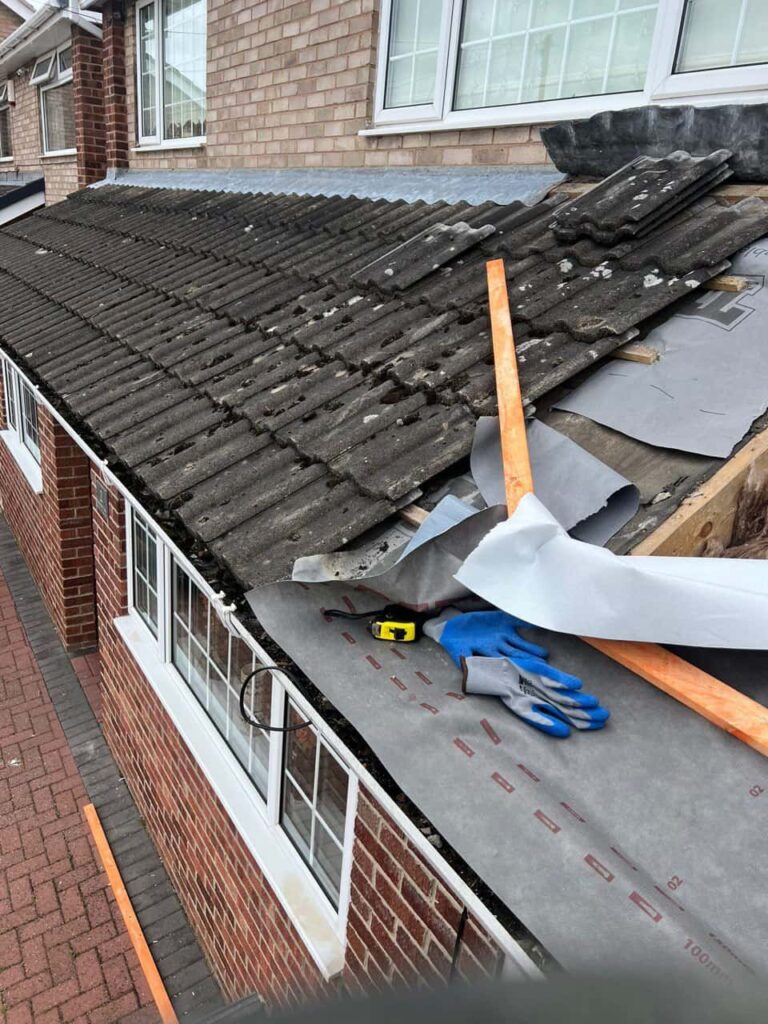
One important advantage of installing a new roof is that removing the existing covering provides access to components that are normally concealed.
A New Roof Allows the Underlying Condition to Be Addressed
When an old roof covering is removed, the exposed construction can be inspected before the new roofing system is completed.
This provides an opportunity to identify deterioration that could not be properly assessed while the original covering remained in place.
Rather than dealing solely with visible symptoms, appropriate work can be carried out to create a sound foundation for the new covering.
This comprehensive approach is one reason roof replacement can make sense when recurring problems are connected to several parts of an ageing roofing system.
Repeated Tile Problems May Indicate Wider Deterioration
Replacing an individual broken or slipped tile is often a straightforward and effective repair.
However, if tiles are repeatedly failing across different parts of the roof, the pattern deserves investigation.
The covering may have become generally weathered, or the components supporting the tiles may be contributing to movement.
If large areas are approaching a similar condition, continually replacing individual tiles may address each immediate problem without changing the wider pattern.
Previous Repairs Can Remain Perfectly Sound
A roof containing numerous repairs is not necessarily badly maintained.
Professional repairs can remain effective for many years. In fact, targeted maintenance can considerably extend the serviceable life of a roofing system.
The concern arises when new defects continue developing in the original materials surrounding those repairs.
Over time, a roof may contain several sound repaired sections separated by increasingly deteriorated older materials. At that stage, assessing the roof as a whole can provide a clearer understanding of what it now requires.
Recurring Flashing Problems Need Careful Assessment
Flashing protects important junctions and vulnerable details around a roof.
Where one small section has deteriorated, localised repair may resolve the problem effectively. Where numerous junctions are showing signs of ageing, however, the roof may have several potential routes for water ingress.
Repeated leaks around different details can indicate that the issue is no longer confined to one isolated section.
A professional assessment can determine whether individual repairs remain sensible or whether broader renewal would provide a more consistent solution.
When Is Continued Roof Repair Still Appropriate?
A roof should not be replaced simply because it has needed repairs previously.
Continued repair can remain entirely appropriate where:
- Defects are clearly localised
- The majority of the roof covering remains sound
- Underlying components are serviceable
- Water ingress has an identifiable cause
- Previous repairs remain secure
- New problems are occasional rather than frequent
In these circumstances, retaining serviceable roofing materials can be a sensible approach.
The decision should always be based on condition rather than assuming that replacement is automatically better.
Signs a New Roof May Be Worth Considering
Roof replacement becomes more relevant when several indicators of widespread deterioration occur together.
These can include:
- Repairs becoming increasingly frequent
- Multiple leaks in different locations
- Large numbers of deteriorating tiles or slates
- Problems affecting several roof details
- Deteriorated underlying materials
- Repeated movement of the roof covering
- Numerous ageing repair areas
- General loss of dependable weather protection
No single symptom automatically means a new roof is required. It is the overall pattern that matters.
A New Roof Creates Consistency Across the Roofing System
One challenge with a heavily repaired older roof is the variation in condition between different components.
Some sections may be relatively new while other parts have been exposed to decades of weathering. If deterioration is widespread, this difference can result in one older component failing after another.
Roof replacement provides the opportunity to renew the roofing system in a coordinated way.
Rather than continually responding to separate weaknesses, the roof can be approached as one complete protective structure.
Replacement Can Correct Problems That Surface Repairs Cannot
Some roofing problems originate beneath the visible covering.
If the issue involves deteriorated underlay, unsuitable battens or widespread problems with supporting components, repeated surface repairs may provide limited benefit because they do not reach the underlying cause.
Removing the existing covering makes these areas accessible.
Where necessary, appropriate corrective work can then be completed before the new roof covering is installed.
Why Accurate Diagnosis Comes First
Recurring problems do not automatically justify extensive roofing work.
Before deciding whether a new roof is appropriate, it is important to understand:
- Why the problems keep occurring
- How much of the roof is affected
- Whether previous repairs remain sound
- What condition the underlying materials are in
- Whether deterioration is localised or widespread
Without this information, it is difficult to determine whether replacement would address the problem or whether a more focused repair remains sufficient.
Professional Roof Assessment in Atherstone
At Atherstone Roofing Repairs, we provide professional roofing services throughout Atherstone, Warwickshire. Where a property has experienced repeated roofing problems, the first priority is understanding the condition of the complete roofing system.
If defects remain localised, professional repairs may continue to provide an effective solution. Where problems are occurring across multiple areas and deterioration has become more widespread, a new roof may offer a more comprehensive way to restore dependable protection.
The objective is to recommend work that reflects what the roof genuinely needs rather than replacing serviceable materials unnecessarily.
When Repeated Repairs Become a Useful Warning Sign
One repair should rarely be viewed as evidence that a roof is reaching the end of its serviceable condition.
A developing pattern is much more informative.
If homeowners find themselves dealing with new leaks, displaced materials and deterioration across different areas increasingly often, it may be time to stop viewing each problem separately.
A whole-roof inspection can establish whether these faults share a broader cause and whether the existing roofing system remains practical to maintain through individual repairs.
Conclusion
A new roof can solve recurring roofing problems when those problems are being caused by widespread deterioration across the existing system. Renewing the roof provides an opportunity to address the outer covering as well as inspect and, where necessary, correct weaknesses in underlying components.
However, repeated problems do not automatically mean replacement is required. If the cause is genuinely localised and the wider roof remains sound, professional repair may still provide the appropriate solution.
For homeowners in Atherstone, Warwickshire, Atherstone Roofing Repairs can assess roofs experiencing recurring leaks, damaged materials or increasingly frequent defects. If roofing problems keep returning, a professional assessment can determine whether further targeted repairs remain suitable or whether a new roof would provide a more comprehensive and dependable solution.
Call us on: 01827 949 598
Click here to find out more about Atherstone Roofing Repairs
Click here to complete our contact form and see how we can help with your roofing needs.